The Day I Became a Potato Celebrity in Indonesia
Another day, another island. We arrived at Kawa Bay in the afternoon, and for the rest of the day we were left to our own devices on board. The next day, Mark and I decided not to go ashore with the rest of the crew. It would’ve been the same quick spiel—wander about looking for a school, ask the same questions, then stroll back and leave the next morning.
Instead, we used the time to get a bit of work done on the boat while the rest of the crew went exploring. The peace and quiet didn’t last long though—soon enough, the crew returned with a boatload of giggling girls.
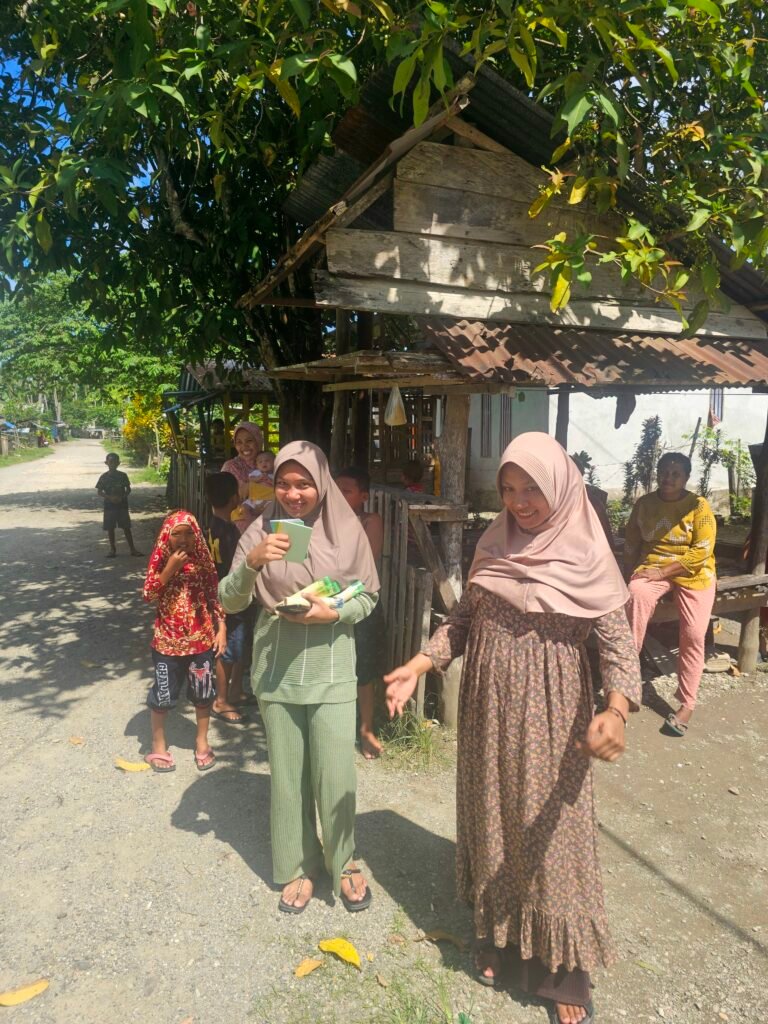
There I was, sitting on the floor labelling cans like a pirate librarian, when five girls stormed into the saloon, shrieking with excitement at the sight of me. They all plonked down around me, phones out, taking pictures like I was some kind of jungle celebrity. It’s funny really—this whole trip we’ve been waltzing into people’s villages and snapping photos of them, but here in Indonesia, the tables have well and truly turned.
Then Mark walked in, and cue round two of the screaming. Indonesians think white skin is beautiful and never stop telling us how pretty we are. I mean, I’m not going to lie—it’s nice to hear! But to be fair, I’ve got a solid tan going on. I’m more of a lovely latte these days, white is long gone. Still, standing next to these girls, I looked like a boiled potato. Okay, I always look like a potato—but by my standards, I’m damn tanned!
Two of the girls offered to organise a driver for the next day to take us to the “Apple Tree”—a natural spring with cool, fresh water. For 700,000 Rupiah between the four of us, we signed up for the adventure. Ambah and Dian were over the moon, since it meant a change of scene for them too. Normally they don’t work and just hang around at home all day.
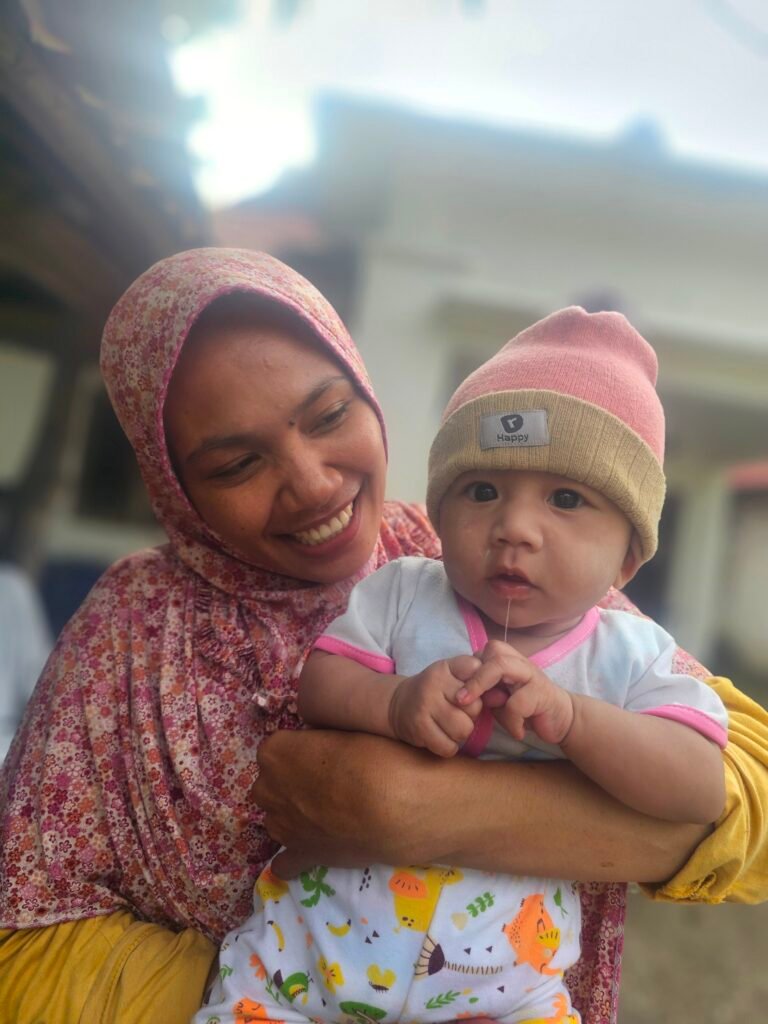
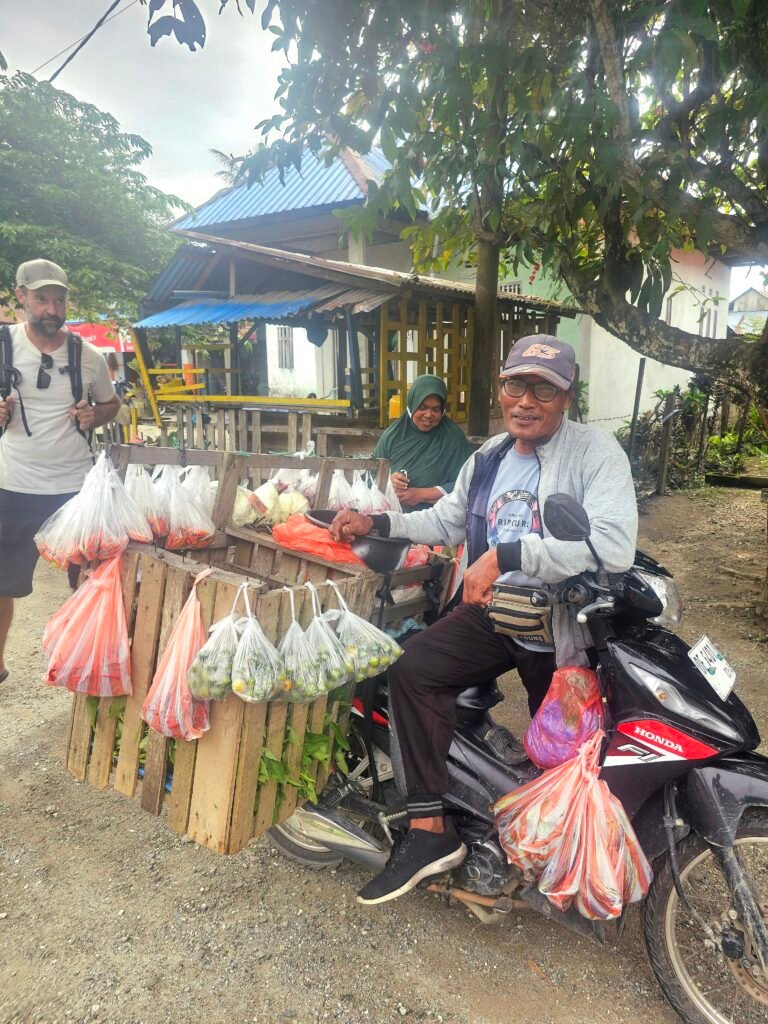
The next morning at 10 a.m., we met at the girls’ house, where the entire extended family (including a tiny newborn nephew) was outside to greet us. We were way too early, so we had to wait a bit for the driver, which was totally fine—it gave us time for a full-on family photo shoot. Or rather, they took about 57 pictures of us. We had a bit of a chat with the brothers, sisters and mum. Meanwhile, a tiny veggie market rolled up on a motorbike. Hilarious really—back in Germany, we had mobile supermarkets too, but they were more like lorries you walked into. This was more like… a travelling salad on wheels.
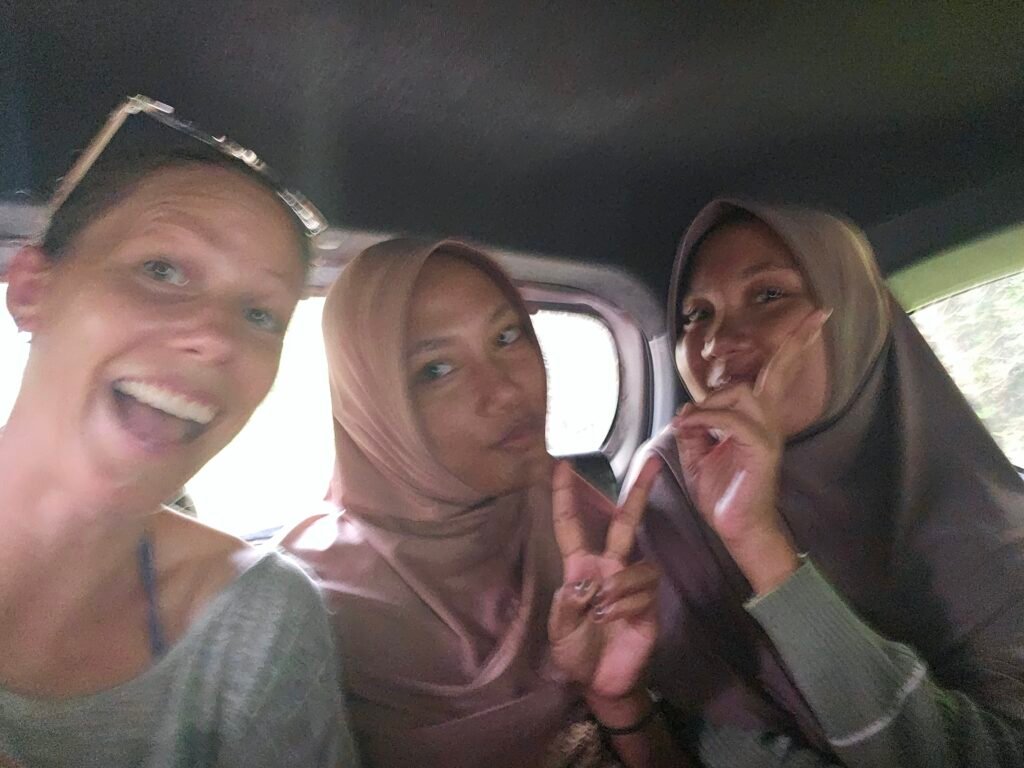
When the driver finally arrived, we hit the road. It was a short but hilarious trip. I was squished in the back with Amber and Dian, who immediately cranked up the stereo and blasted karaoke love ballads. Of course, I joined in—what’s a road trip without a bit of off-key wailing? Sadly, the skipper weren’t feeling the vibe and demanded the music be turned down. Spoilsports. Still, it was only a 30-minute ride.
At the Apple Tree—officially called Air Putri Waiyoho Kawa—we paid a 200,000 Rupiah entry fee per car, included in our driver fee. While everyone jumped into the spring, I wandered off with the girls to check out the food. I’d prepped breakfast that morning, but at the last minute we left earlier then the agreed time and it got left behind.
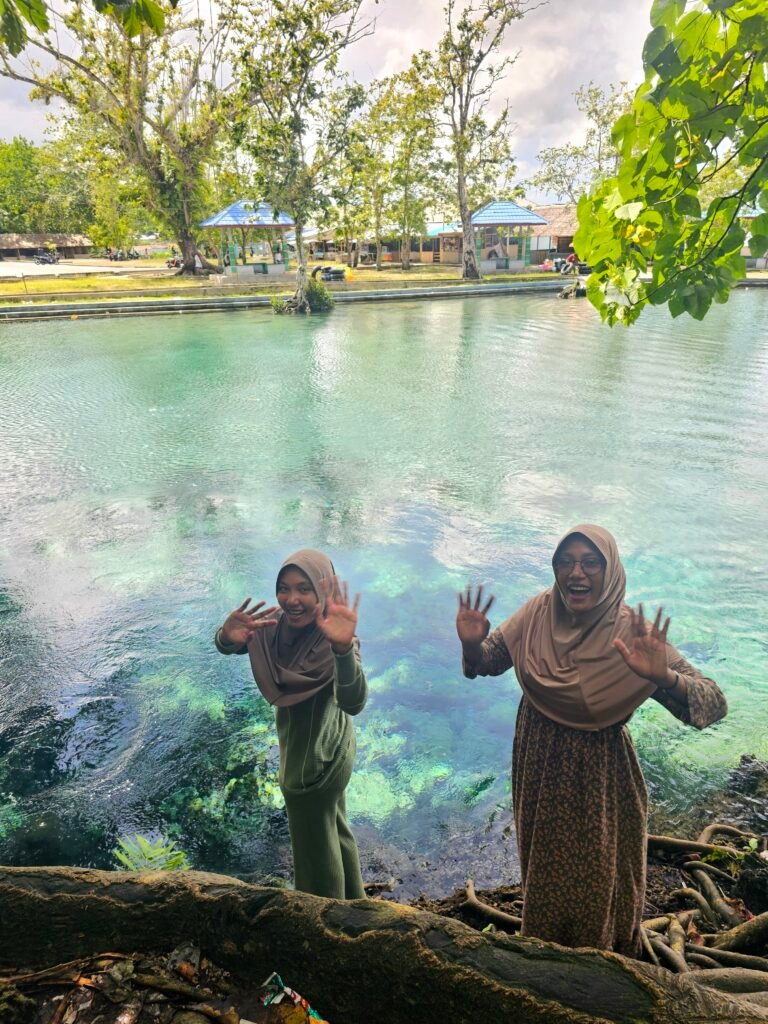
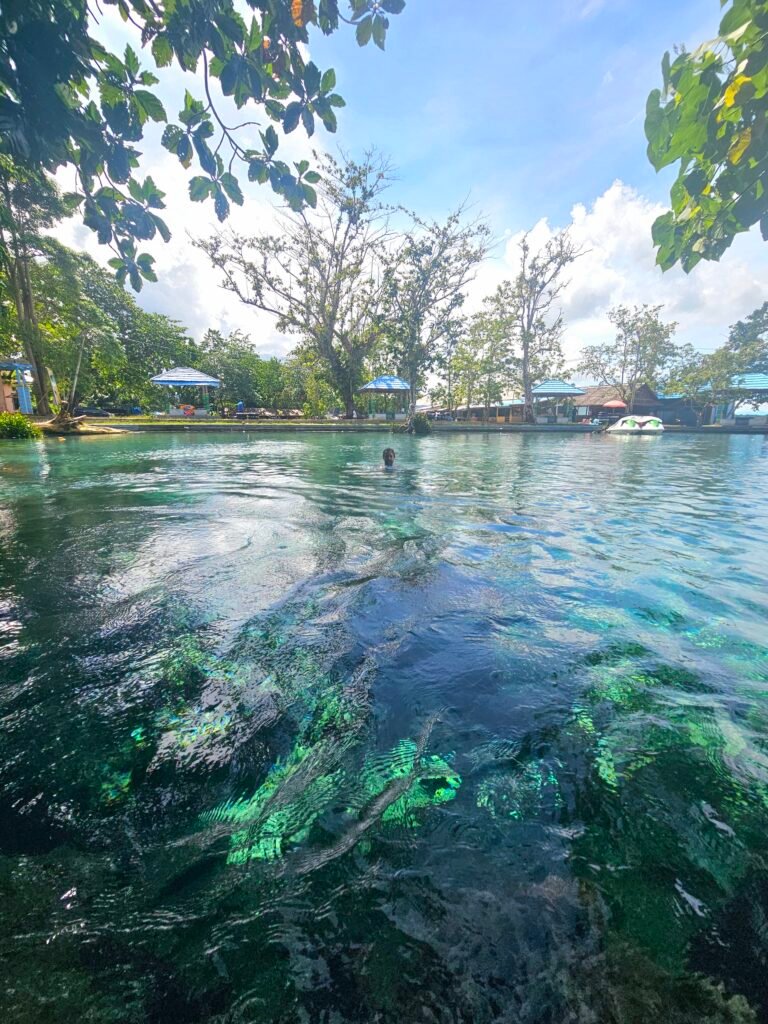
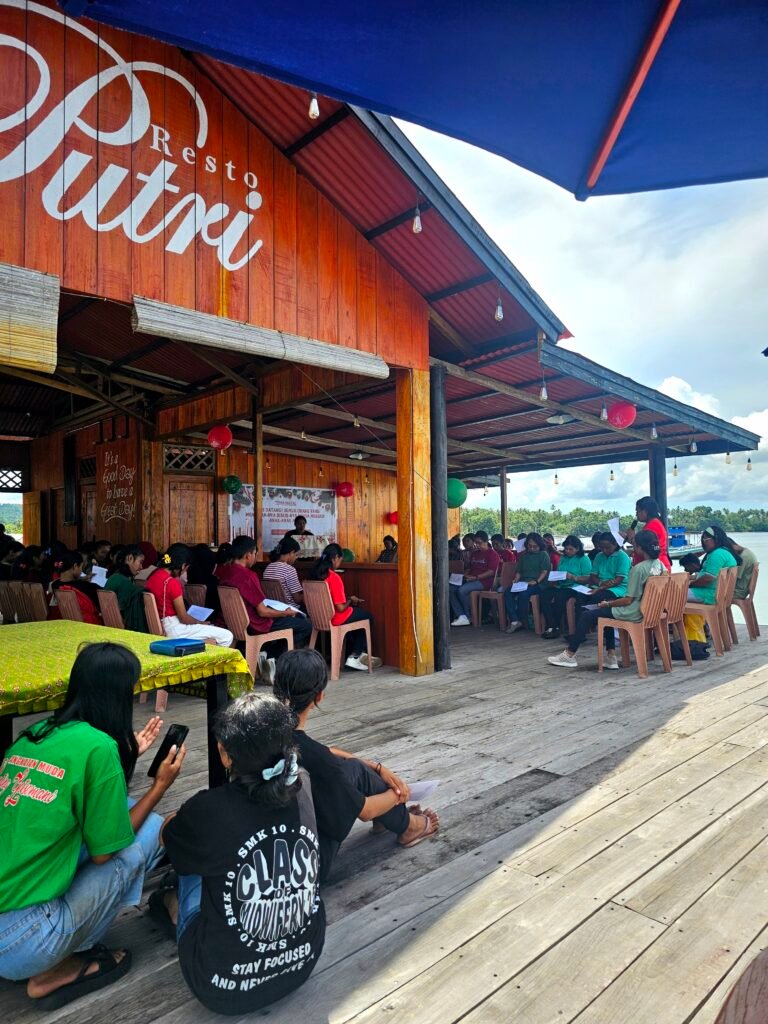
We heard singing coming from around the corner and remembered a school bus had arrived earlier. It turned out to be a Christmas school event organised by the church. One minute later, we were sat in the middle of a service. I didn’t understand a word, but the tunes were familiar Christmas bangers. After a few songs and prayers, we quietly legged it—my stomach was starting to file official complaints.
First food stall: fruit. Felt like being healthy for once. The girls recommended a dish called rujak, and oh my days—it was glorious. They crushed roasted peanuts with raw palm sugar into a paste, chucked in pineapple, apple, cucumber, and papaya, and mixed it all up. I skipped the chilli (I’m not that brave), but it was sweet, crunchy, and heavenly. So good that we ordered another six for the rest of the team, including the driver. By the end it was more like spooning sugar soup, but I had zero regrets.
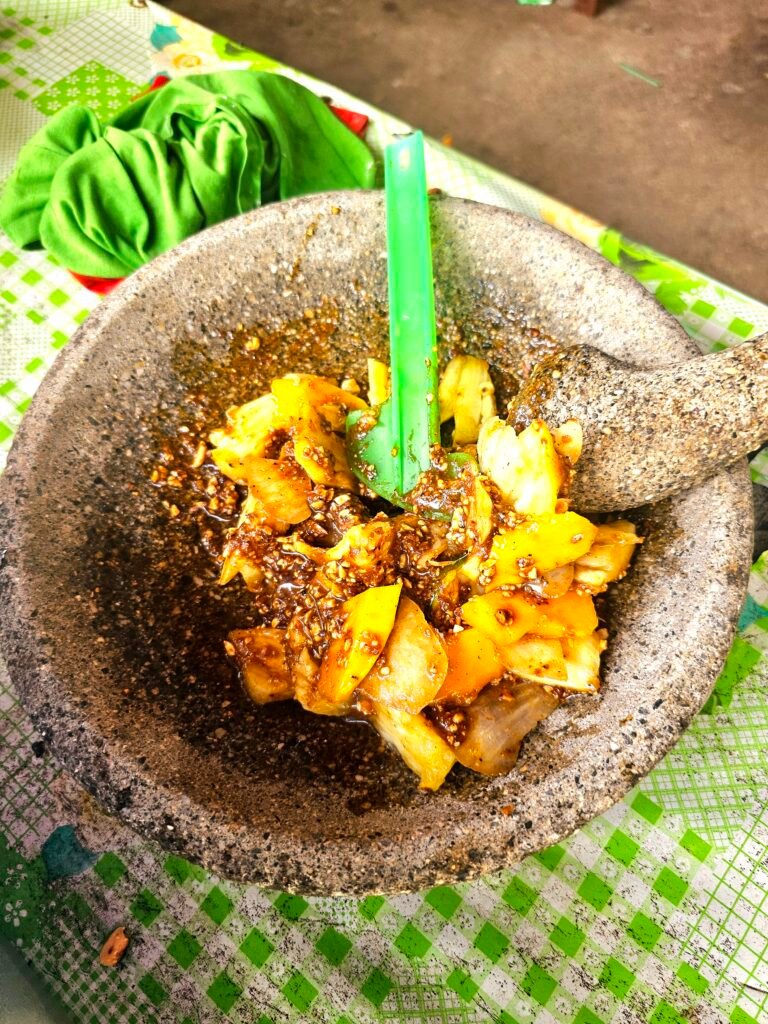
On the way back, we asked to swing by a market as veggies were running low on board. The “market” turned out to be three stalls by the road. I was ready to grab local goodies like papaya flowers and water spinach—the girls even explained how to cook them—but we picked up nothing. Same old menu then. The rest of us consoled ourselves with ice cream, but I couldn’t manage a single scoop—not even my dessert stomach could take more sugar after that Rujak overload.
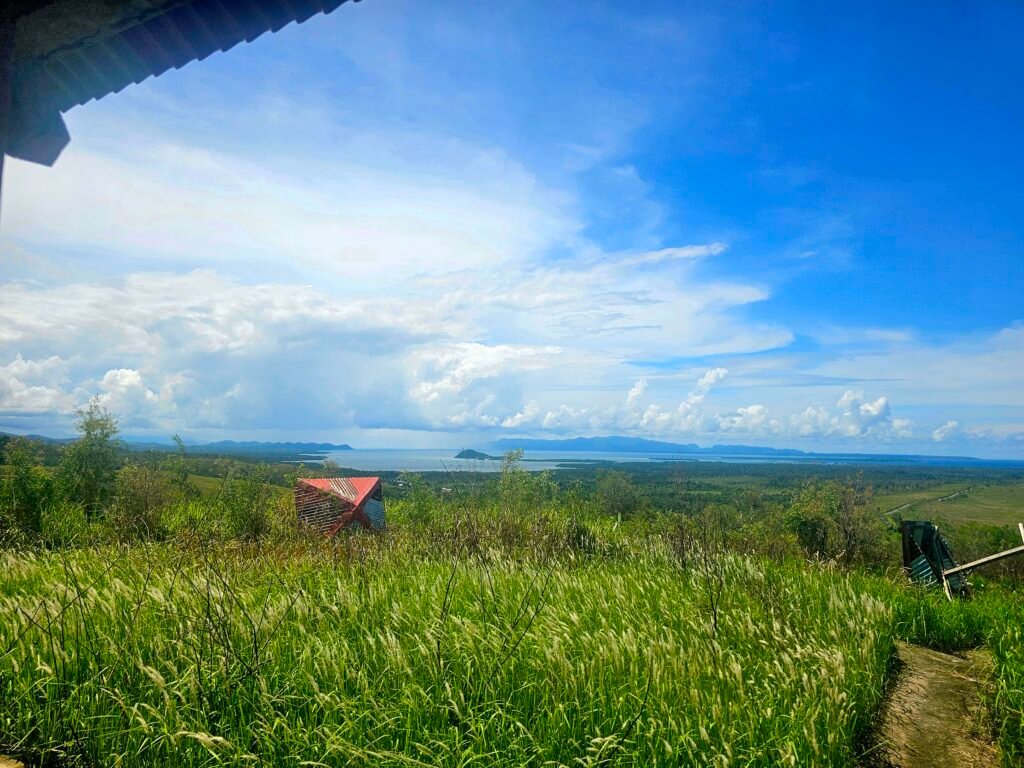
The skipper was keen to get back, but the girls managed to convince everyone to go up a nearby mountain for the views. Short ride, cracking scenery. Except… on the way back, the driver topped up with what can only be described as petrol-adjacent liquid from a roadside stall. The car hated it. We spent 30 minutes lurching along, the engine spluttering like it had a hangover, changing gears every two seconds. Somehow, we made it back to the dinghy.
Lovely day out though. Always enjoy spending time with locals—it’s the best way to learn about a culture. That’s what this trip’s all about for me: connections, customs, and living the local life. Feels like we lose that a bit with the constant rushing from place to place.
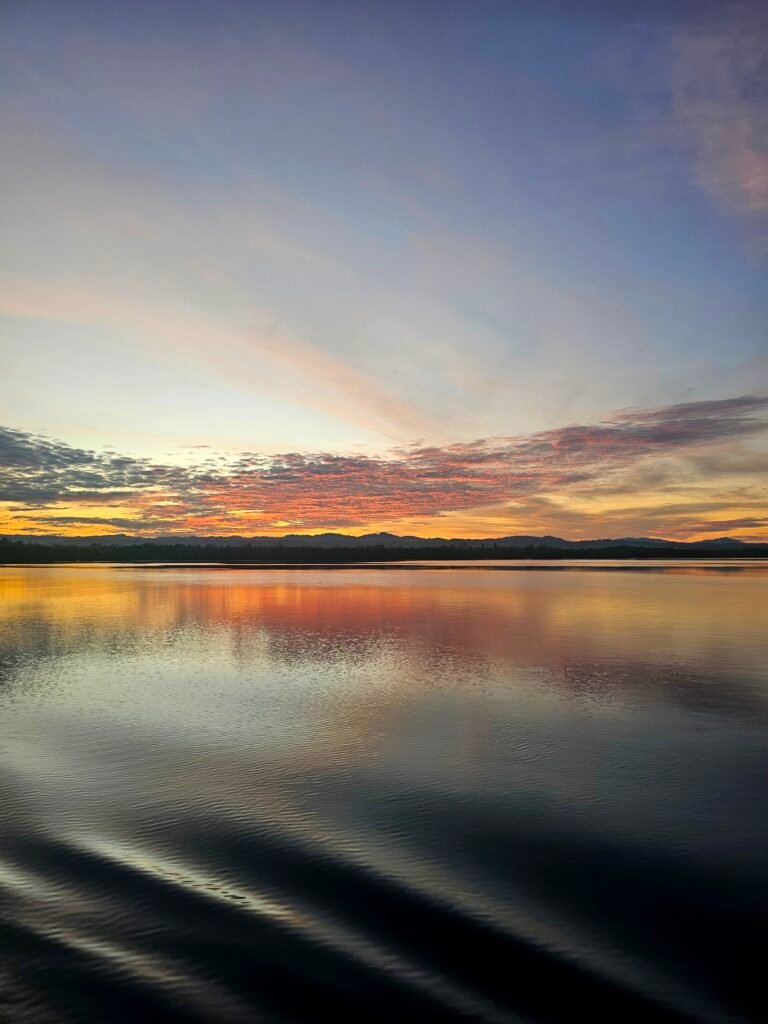
The next morning, off we went again—early start, heading up the coast for snorkelling and to find a decent anchorage to clean the hull. Navigating through uncharted reef waters with MV Strannik is not exactly relaxing, but with all eyes on the water and a slow approach, we found a spot between some cute little islands. Fingers crossed there are no crocodiles.
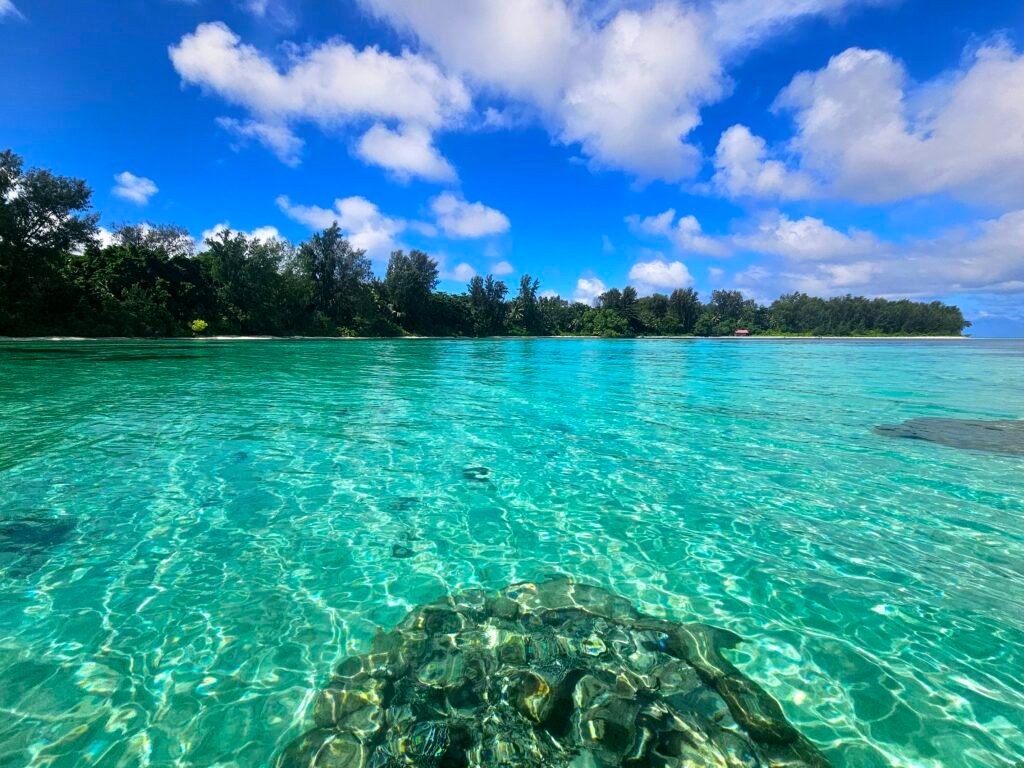
The next day, while Mark and the crew scrubbed the hull, I got stuck into a stock take. Then we actually went snorkelling, and wow—just wow. Stunning corals, dazzling fish—total underwater disco. Tried filming it, but let’s be honest, it never does it justice.
Next morning, crew, who’d walked around the island at low tide, suggested we all do the same. What he failed to mention was that it was now high tide. I thought we were off for a nice beach stroll. I came completely unprepared—just my phone, a bottle of water, no snacks, no swimwear, no sunscreen. Rookie error.
The walk was brutal. Knee-deep water, crashing waves, and eventually we couldn’t walk in the sea anymore as the swell was trying to steal our legs. So, we battled through jungle and scrambled over steep rocks. Occasionally we’d pop out onto a bit of beach, then back into the wild again.
At one point, Simon yelled “Snakes!”—he nearly stepped on some. Mark and I were just ahead and probably stomped right over them. Luckily, they weren’t the aggressive type, but I wasn’t exactly keen on making new snake friends. We all ended up scratched to bits—shorts and jandals are not jungle gear. I’ve literally read warnings against doing exactly that in Indonesia. But hey, getting smashed against rocks didn’t sound like a better option.
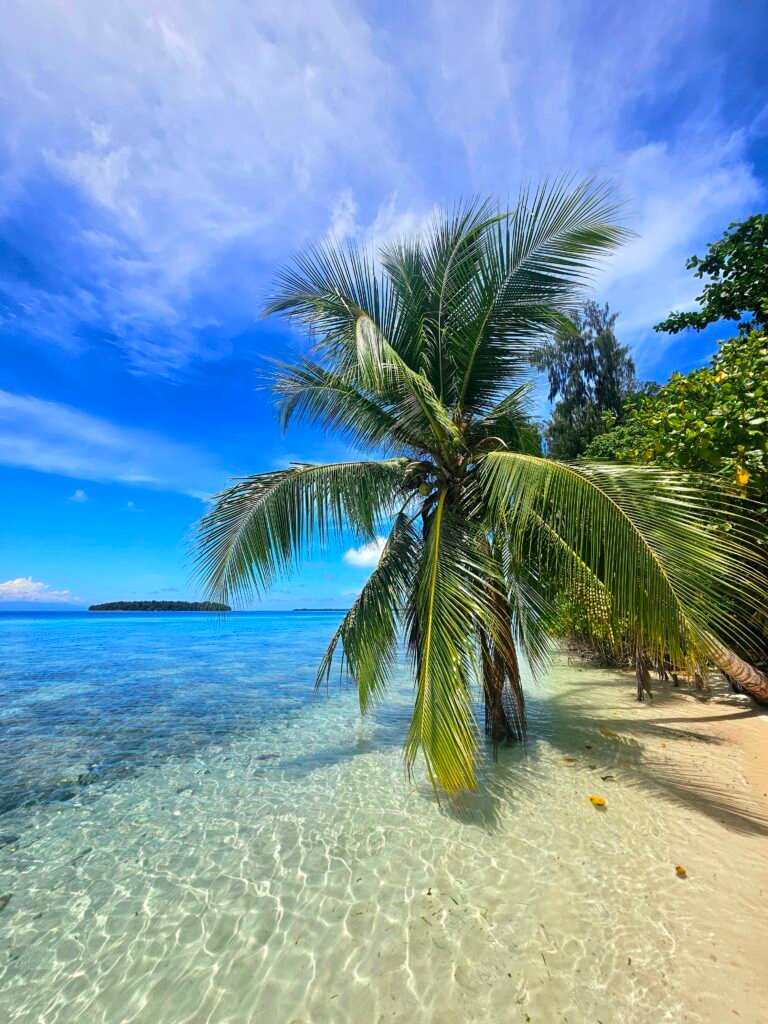
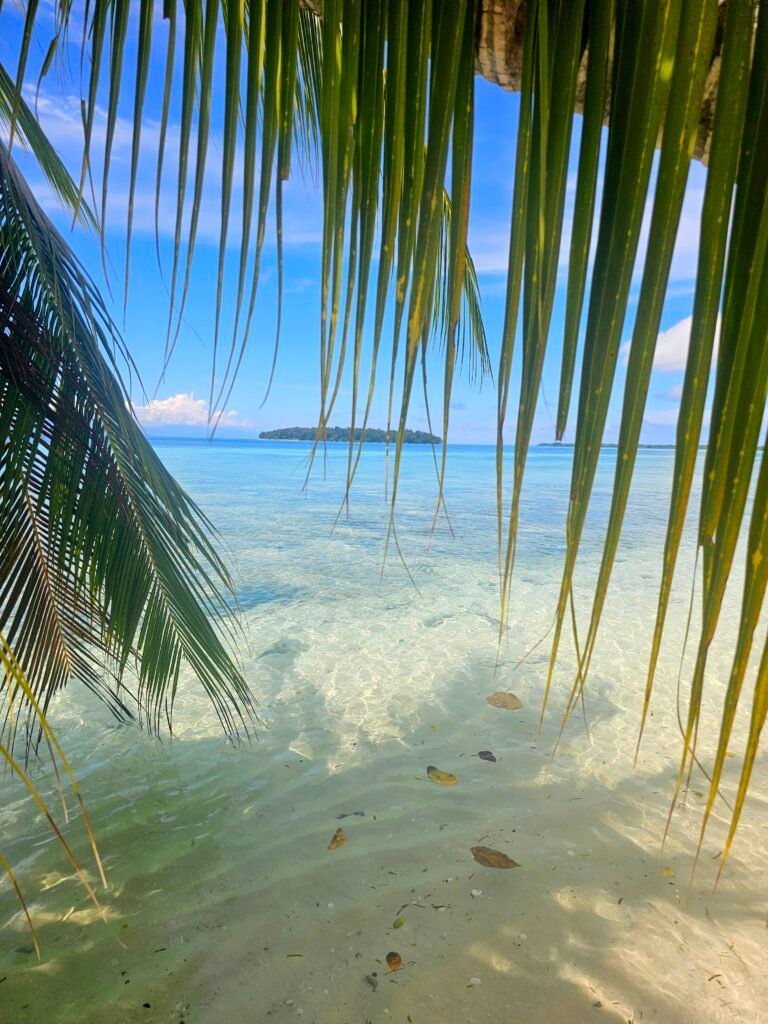
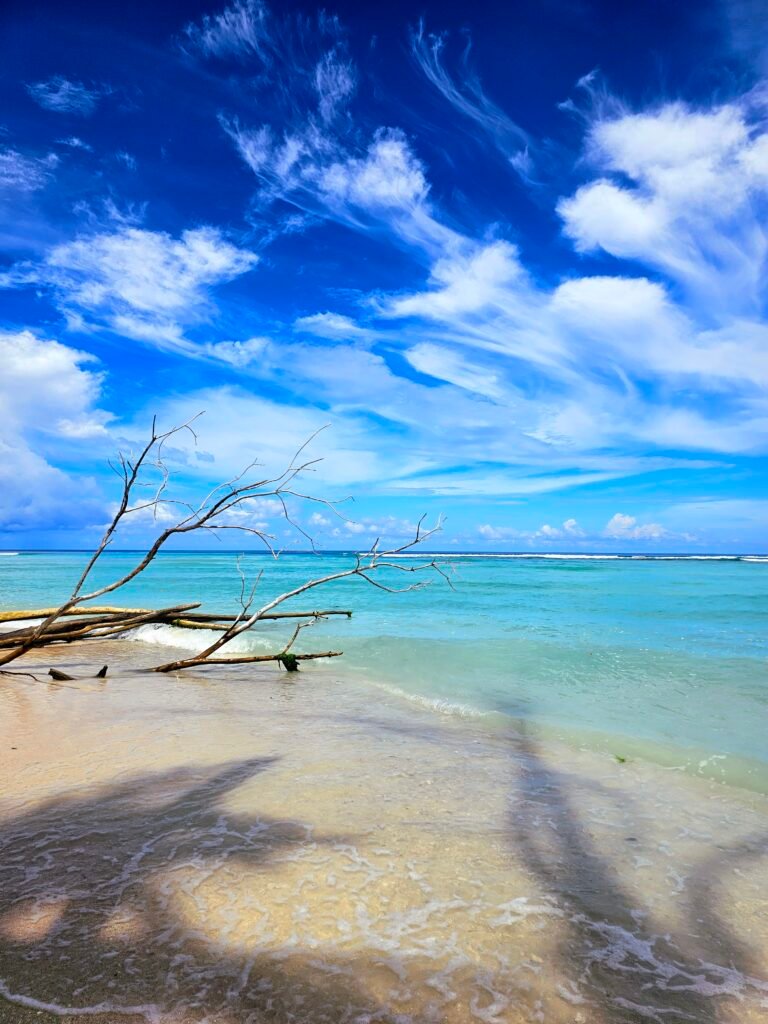
Eventually, we made it back to the calm northern side and jumped straight into the sea. Fully clothed, jandals and all—already soaking with sweat anyway. Mark and I learned a valuable lesson: never leave the boat without a backpack. Our “quick beach stroll” turned into a 3-hour jungle slog. We were wrecked—but what a spot.
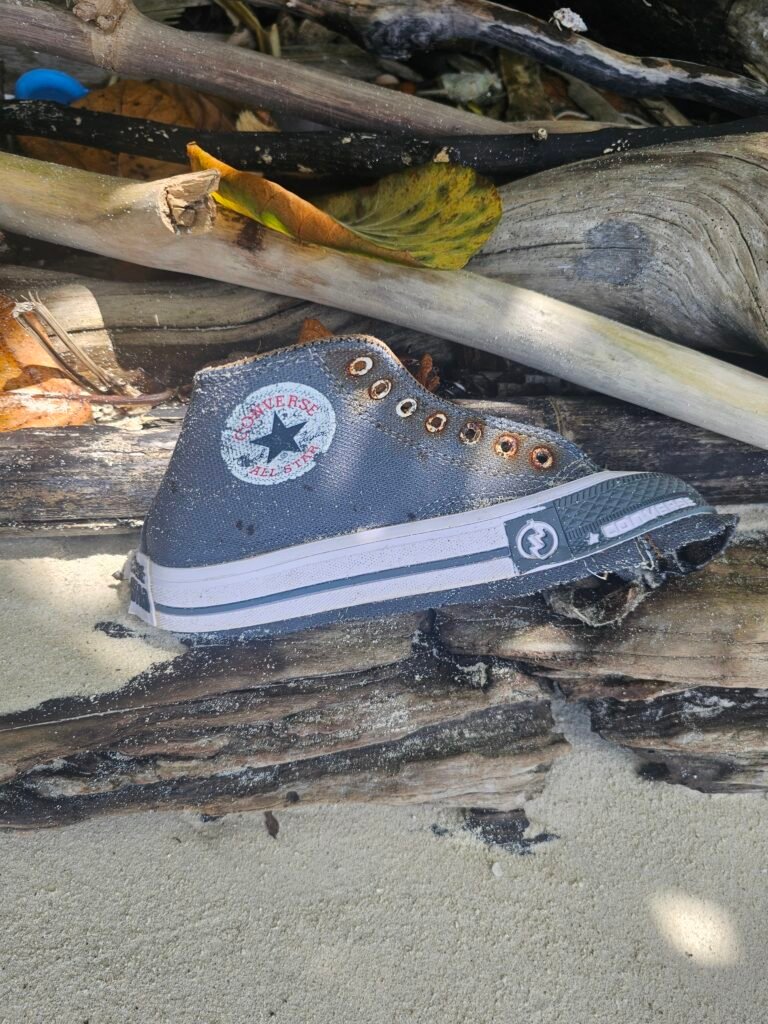
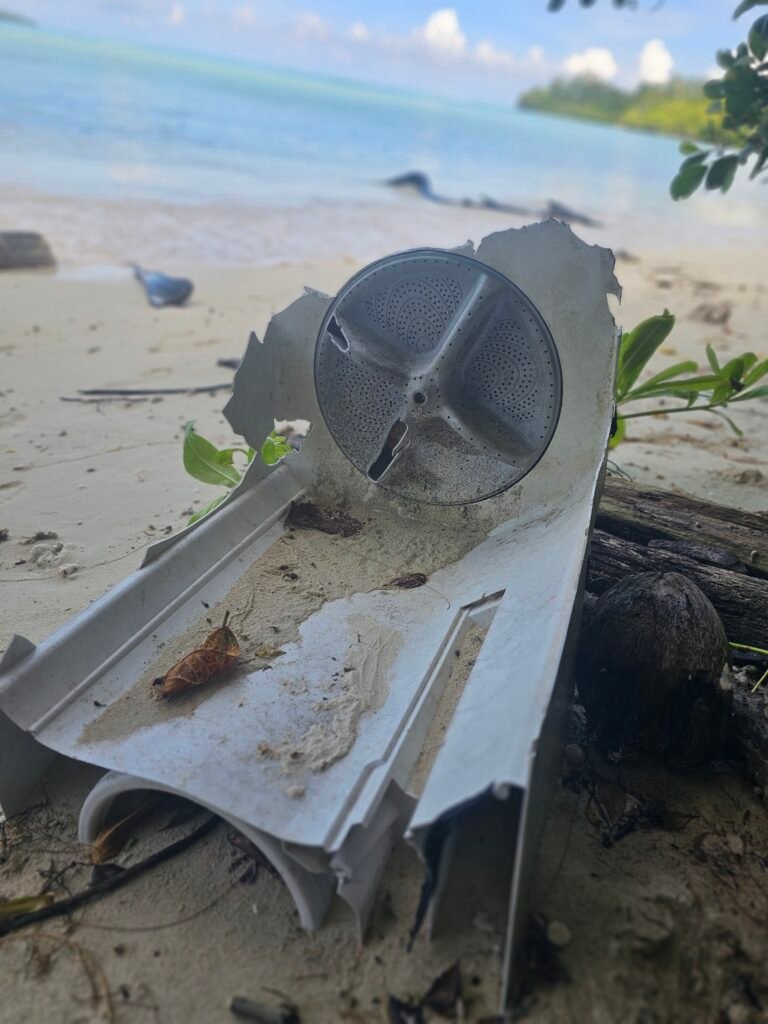
Only one heartbreaking thing: the rubbish. On an uninhabited island. Shoes, plastic, even half a washing machine. It’s soul-crushing. I’m not blaming the locals—there’s no proper rubbish collection even in big cities. In some places, they’re banned from burning it. And the amount of plastic is staggering.
But where do you even start? Well, with myself, I guess. I always decline plastic bags, bring my own veggie nets, and carry a reusable cup. But how do you change the mindset of 280 million people who simply don’t know another way? Thankfully, the younger generation is starting to catch on, thanks to the internet. Still, Indonesia ranks up there with India, China and Africa for plastic pollution. I love this country so much, which makes it even sadder to see it buried in rubbish.
 EN_NZ
EN_NZ  DE
DE